
Surface filling applies a controlled, covering layer of chocolate or compound on top of cupcakes to create a consistent finish across batches. FoodJet depositors integrate inline and are tuned to cupcake format, tray presentation and material behavior such as viscosity and temperature. If you want product variation, optional patterns or drizzles can be configured with FoodJet Designer Studio. When product position varies, vision guidance can help improve placement consistency.
FoodJet enables surface filling on cupcakes by depositing a controlled, covering layer of chocolate or compound onto each product. The depositor can be integrated inline and tuned to product presentation, tray layout and material behavior such as viscosity and temperature. Optional patterns can be configured with FoodJet Designer Studio, and vision guidance can be added when the product position varies.
What surface filling on cupcakes means (a covering layer)
Surface filling creates a uniform top layer by depositing a defined amount of chocolate or compound onto each cupcake. Compared with less controlled topping methods, a deposited layer supports repeatable coverage and a consistent visual result. The final appearance depends on cupcake geometry, tray handling and material behavior at process temperature, so depositing parameters are typically tuned to your product and line conditions.
Materials for surface filling (chocolate/compound)
Chocolate and compound characteristics—especially viscosity and temperature stability—affect how cleanly a covering layer is deposited. In practice, stable material conditions support sharper edges, consistent coverage and repeatable portioning. A suitable supply setup helps keep the material within the required process window. Share your material and target finish and we can advise on a practical configuration.
Where to place the depositor in your line
Surface filling is typically integrated when cupcakes are stable on the conveyor or tray and ready for topping. Placement depends on line layout, cooling stage, and the behavior of the chocolate or compound at process temperature. The best position is usually determined by available space, product presentation, and the required definition of the surface layer.
Optional: patterns and drizzles with FoodJet Designer Studio
If you want variation beyond a uniform surface layer, FoodJet Designer Studio can be used to configure patterns and drizzles on top of the surface filling layer. This supports product differentiation without changing the base cupcake. The achievable pattern complexity depends on tray presentation and the required accuracy. If you share your target design, we can advise on a practical configuration for your line.
Optional: positioning accuracy (sensor vs vision guidance)
For stable, well-aligned trays, a sensor-based approach is often sufficient to trigger depositing at the right moment. If cupcakes can shift, vary in spacing, or rotate, vision guidance can detect position and orientation of each piece and adjust the depositing accordingly. This helps maintain consistent placement when perfect upstream alignment is not feasible.
Discuss your cupcake surface filling application
Share your cupcake format, tray layout, and chocolate/compound. We’ll advise on the depositing setup, integration point, and whether FoodJet Designer Studio patterns or vision guidance are recommended.
Check out videos
Check all videos-
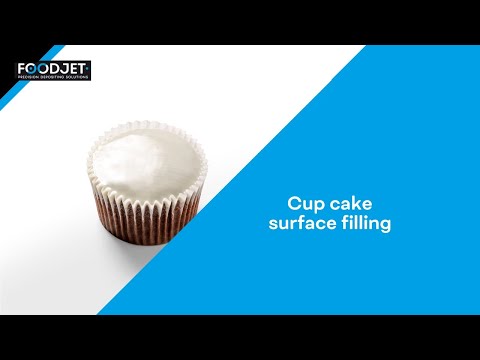
Cupcake surface filling [without getting messy]
Watch how we cover the surface of a cupcake right up to the edge with chocolate, without spilling any on the paper cup. More info here
Other applications
Looking for other ways to apply chocolate or compound? Explore related applications below—each one focuses on a specific product format and depositing challenge.